
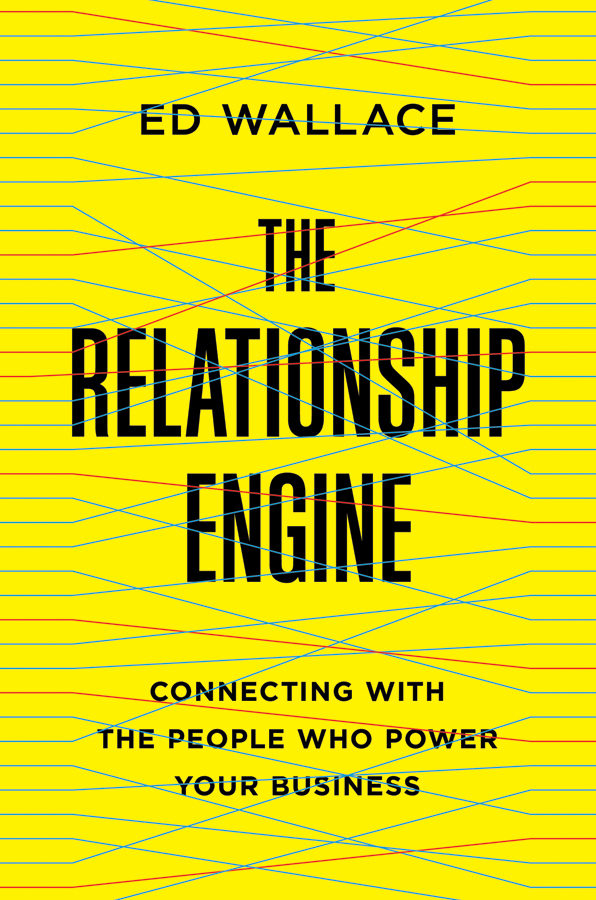
SmartCEO’s August CEO Reading List features Business Relationships That Last
— Gary Bender, CFO, ABEC, Inc.
PHILADELPHIA, April 19, 2011 /PRNewswire/ — Leading academics at The 2nd International Colloquium on Consumer-Brand Relationships awarded “The Influence of Warmth & Competence on Brand Relationships,” with the Best Paper Award at their annual research conference. The research paper is based on a study by co-authors Chris Malone, Dr. Susan Fiske and Dr. Nicolas Kervyn.
The award-winning paper evaluated the impact of warmth and competence perceptions on purchase intent and loyalty for twenty-seven different national brands. It found that consumers’ behavior toward brands is strongly linked to their instinctive warmth and competence assessments of them, as has been widely documented regarding humans’ assessments of one another.
“This research sheds new light on why consumers develop relationships with brands and, in particular, which brand qualities or personality characteristics encourage deeper relationships,” said Susan Fournier, Associate Professor of Marketing at Boston University and co-founder of The International Colloquium on Consumer-Brand Relationships. “The study is ground-breaking in its application of a well-established social perception model to understand consumers’ relationships with brands. This is a great example of what can be accomplished when academics and practitioners collaborate to address important business questions.”
About The Relational Capital Group
The Relational Capital Group is a research-based, brand loyalty and relationship marketing firm that helps organizations build and strengthen the brand relationships that drive their growth and profitability. They are recognized as world-class experts on the principles, process and science of consumer-brand relationships. The firm is located in Philadelphia, PA.
About Dr. Susan T. Fiske
Dr. Fiske, Eugene Higgins Professor of Psychology at Princeton University, is a social psychologist renowned for her work on social cognition, stereotypes, and prejudice. She has authored over 250 publications and written several books.
About Dr. Nicolas O. Kervyn
Dr. Kervyn earned his masters and doctoral degrees in psychology from the Catholic University of Louvain and is currently a research fellow at Princeton University, working closely with Dr. Fiske. He has published several research papers on warmth and competence, social perception, and group stereotypes.
Scott Addis, President and CEO of The Addis Group, writes about the importance of Relational Capital in the insurance industry. September 2010
http://www.roughnotes.com/rnmagazine/2010/september2010/2010_09p218.htm
Chris Malone was a guest on CNBC’s Closing Bell with Maria Bartiromo at 4:25 pm on Wednesday, September 29, 2010. Watch the segment below:
Credibility
Until you are credible, your clients will not be interested in trusting you or exploring how you can help them.
Integrity
Establishing credibility can help you work toward displaying your integrity. As your clients learn to trust you, they begin to share their goals, passions, and struggles, and they ask you to deliver on various commitments.
Authenticity
Finally, after you’ve delivered on those commitments, authenticity comes into play. During this stage your client welcomes your help, even when it is unsolicited or when you have been honest about not having all of the answers.

When you make worthy intent your going-in principle in your business relationships, then credibility, integrity, and authenticity—the three essential qualities for creating relational capital—will be more easily and readily expressed, and you will be well on your way to advancing every business relationship.
Authenticity is about being honest with ourselves and our clients regarding who we are and what we know; it is the quality of being genuine.
I believe that authenticity is sometimes the hardest of the three essential qualities of relational capital to demonstrate, and it requires the highest degree of bravery on our part.
Why? Because at times in business we can get caught up in our image and how we look in front of clients, especially when we do not have all of the answers.
The Power of “I Don’t Know”
The three most powerful words in business are “I don’t know.” This simple admission that you don’t have all of the answers is refreshingly honest in today’s economy.
Too often we put a lot of energy into keeping up a façade in our business relationships…..an appearance of strength, expertise, influence, knowledge….. for fear that others will see us as weak or vulnerable.
One of the hardest things for business people is to openly admit that they don’t have all the answers. Saying “I Don’t Know” can open the doors to a healthy discussion about possible and even better solutions. The fact that the individual may be admitting he/she isn’t the ultimate source of wisdom is not the point; the point is that now everyone is able to focus on the need itself and how to meet it most effectively together as a team.
Sometimes just saying the authentic magic words “I Don’t Know” can result in amazing things!!!
BUSINESS EFFECTIVENESS TIP
When in a business meeting, listen with more than just your ears. Sincerely acknowledging points by nodding occasionally, making eye contact, taking notes, and being fully engaged all demonstrate genuine concern for the person speaking. Watch his or her facial expressions, eye contact, and hand gestures” to pick up on unspoken messages.
A big thank you to everyone who attended the book launch party for Business Relationships That Last. We had a great time, and it was so nice to be able to relax and celebrate with our friends.
Integrity is, quite simply, being trustworthy in our actions and character.
Integrity is doing the right thing when no one is watching, like leaving our business card on the windshield of a car we just bumped in the parking lot.
It is saying what we are going to do and then doing it. Integrity is the quality of having honest and truthful motivations for our actions. This translates directly into applying the principle of worthy intent in all of our interactions in the business world.
Everyone wants to believe they can be trusted and can trust others in life and business. Many clients gauge our integrity by the way we make our commitments and deliver on them. After we have established that we are credible, our clients will begin to ask us to make commitments to them in the form of contracting for goods, services, and solutions.
When we deliver what we promised, we display our integrity and reinforce the client’s trust. In doing so, this opportunity further advances the business relationship and increases the distinctive value of our relational capital.
Integrity is also about expectations, making sure we set them appropriately and then consistently delivering on them.
The old phrase about commitments, “under promise and over deliver,” actually contradicts the worthy intent that we should strive to bring into our business relationships.
BUSINESS EFFECTIVENESS TIP
Trust begins with commitments which are the promises we make in business. Don’t make promises you can’t keep during business discussions. Even if they are made casually, somewhere along the line you’ll be held to your word. Failing to produce what you’ve promised will create atrophy in the relationship and close the door to any future opportunities.
It’s simple, JUST KEEP YOUR PROMISES!
The American Heritage Dictionary defines credibility as “The power to elicit belief.”
Credibility is the quality that makes others believe in you, your words, and your actions. Credibility is the gatekeeper quality. If you don’t first establish credibility and competence with your prospect or client, you will struggle to create anything more than a transactional relationship with that individual.
Your credibility has a major impact on your success in any business relationship. We frequently discuss creating trust-based relationships, but unless you are credible early on, your opportunities to display trustworthiness will be limited.
As client-facing professionals, we all want our clients to trust us. Once they do, we can start doing things for them in order to move the process along. However, until we are deemed credible and competent, why should clients trust us?
Credible people transcend the automatic sense of urgency that permeates much of today’s world by working to identify real priorities and opportunities.
One way to get started during conversations is to establish common ground with questions like:
BUSINESS EFFECTIVENESS TIP
My friend and mentor Max, the famous taxi driver, called this approach “sincere inquiry.”
Credibility begins with taking the time to become interested in aspects of your colleague’s business goals and objectives.
Three Essential Qualities
Relational Capital
The distinctive value created by people in a business relationship.
Your ability to advance business relationships by creating relational capital with your clients is the most impactful way for you to distinguish yourself in your client interactions. In my book, Business Relationships That Last, I discuss the principle of worthy intent as the foundational, or “going in,” approach to every business relationship.
In the next series of blog posts, I will explore the three essential qualities that are at work as you create relational capital in every one of your business relationships.
Your credibility, integrity, and authenticity constitute the essential foundation upon which you build relational capital in the business world. These qualities impact how you are perceived and valued, and their convergence results in the relational attributes that attach to you in every business relationship.
Credibility, integrity, and authenticity are present in every business relationship to some degree because each of us possesses. these qualities. In outstanding business relationships, however, these qualities form the very basis of the relationship, leading to many competitive advantages and rewards for client-facing professionals.
And while each quality is important in its own right, understanding how the three converge is the key to creating relational capital with each business contact.
Many businesspeople perceive these qualities to be very similar; in fact, my clients routinely substitute one for the other during our discussions.
Looking closer, however, we can see that there are important fine distinctions among the definitions of each term, as well as a distinct order in how each one manifests itself in a business relationship.
Business Relationships | Human Capital | Brand Strategy | Relationship Marketing | Relationship Assessments | CRM | Brand Loyalty | Cross-Functional Collaboration | Loyalty Marketing
Home | About Us | Careers | Terms of Use | Privacy Policy | Copyright Notice | Blog | Site Map | Media | RSS | LINKEDIN
Copyright © 2012 The Relational Capital Group. All Rights Reserved. Web Design by Stranger Studios